
Humanitarian Relief & Emergency Operations
Save the world, one drop at a time.
In the critical moments after a disaster hits, time saved means lives saved. During emergency situations, whether you are a government first-responder, international cooperation agency, humanitarian assistance organization or charity, your primary water-related objective is to deliver clean water solutions that will sustain life and enable you to manage the overall crisis through to recovery.
At Hydro Nova, we understand the complex nature of water in the emergency context and the role that it plays in every stage of disaster management—from rapid response to recovery, to prevention and preparedness. Our unique approach to humanitarian situations enables us to deliver clients a range of specialized, time-sensitive solutions tailored to their needs. We can assist at any phase of the crisis, and guide you until you have achieved your mission.
We service international aid organizations and government agencies responding to both natural and man-made disasters around the world. Our capability to map water rapidly and over large areas uniquely positions us to secure emergency water supplies for those in dire need. We have over a decade of experience in locating water for refugees, disaster-affected communities and in conflict situations. When famine struck in the Horn of Africa in 2011-2012, we discovered large undocumented reserves in Kenya and Ethiopia that are now being developed to alleviate long-term drought. We’ve proven that far-reaching impacts are attainable with the right vision.
Our offerings for humanitarian and emergency actors:
RAPID RESPONSE
Be in command and control of the disaster relief operations with our time-sensitive water solutions:
HN Rapid Response Team:
Our stand-by team of experts deployed to disaster-struck area to provide relief agencies technical, logistical and coordination support on a broad range of water-related disciplines
Disaster intelligence:
Optimize disaster certainty with our rapid data collection, rapid damage and needs assessments and mapping services. We generate critical intelligence on the impacted population, existing local water supply, structures, infrastructure and other water-dependent systems.
Awareness and education programming:
Location-specific communication and education tools designed to build risk-informed response of local populations in relation to their new water situation.
Emergency water supply:
We site, design and manage the construction and operation of new emergency water supplies for the affected populations, even in the driest and most remote areas
Logistical planning:
With our water logistics support solutions, we’ll make sure water and related-assets are in the right place at the right time. Our optimization and supply chain strategies ensure rapid response delivery of supply, materials and distribution of water assets.
EARLY RECOVERY
Restore normalcy and turn crisis into opportunity with smart, sustainable early recovery solutions:
Water recovery planning: Our recovery planning solutions build resilience of local water supply systems, equipment, infrastructure and management systems in the face of future disasters and pave the way towards full recovery.
WATSAN rehabilitation: Return vital life-supporting sustainable and community-based water supply and sanitation systems to operation with our integrated solutions, including assessment, designs, project management, O&M and training.
Sustainable rural agriculture and land rehabilitation:
Our smart water solutions for sustainable agriculture target the restoration of damaged land and environments while also building economic opportunities for affected local communities.
Water governance strengthening:
Our institutional capacity building solutions help develop a range of capabilities in natural disaster management, public services delivery, decision support systems (DSS), information management and implement participatory planning processes.
Water infrastructure engineering:
Expand local water resources beyond pre-disaster conditions. We’ll site, design, and manage the construction of new or rehabilitated water supply infrastructure and related systems. Our engineered solutions also come with community management plans and training to ensure long-term sustainability.
PREVENTION & MITIGATION
Eliminate the probability of further disaster and damage with our post-disaster mitigation solutions.
Risk intelligence:
We provide the best available data and assessment tools to support your prevention planning, including, risk mapping, vulnerability analyses and updates, risk assessments, and development of prevention and mitigation measures.
Water management solutions for prevention: Reduce the likelihood and severity of future catastrophes with our full range of water resources management solutions for disaster prevention and protection, including monitoring systems, data management systems, analytics and assessments, optimization tools, decision support systems, and community water master planning
Water-hazard control systems:
We engineer hazard control systems, including both structural and natural measures, designed specifically to minimize damage from future floods, droughts, contaminations, outbreaks and any situation where water security is a concern.
Infrastructure protection:
Our resilience building approach includes engineering “climate-proof” and defense water-related structures as well as consulting on a range of construction and development planning solutions, including water efficiency code standards, zoning and land-use planning, and development surveying for compliance
Capacity-building DRR programmes:
We develop tools and implement programmes to build institutional, organizational, community and population capacity to mitigate impact of water-related disaster risks
PRE-DISASTER PREPAREDNESS
Proactive solutions for maximum readiness.
Preparedness intelligence: How ready are you for the next water disaster? Understand the state of preparedness and know where to focus your planning with our intelligence solutions, including water resources inventories and baseline assessments, impact assessments, vulnerability assessments and inventories of natural and human resources at risk.
Pre-disaster planning: Innovative strategies for community and institutional-level planning approaches, developed to include adequate triggers for response actions to protect both vulnerable communities and property.
Contingency water supply augmentation: We assess, design and build your emergency supply reserves and develop your contingency plan to ensure business continuity when disaster strikes.
Monitoring and Early warning systems: Our advanced monitoring and forecasting systems utilize the latest intelligence technologies and are people-centered for at-risk communities. We’ll design and build your monitoring or EW system for a range of water resources and disaster risk categories.
Preparedness capacity building: Designed for just about any level, our public education and relations exercises and training programmes for institutions, organizations, communities or general public address the full needs of communities and involve relevant stakeholders for maximum impact.
A crisis averted: Thousands of lives saved at water-stricken refugee camp, 2014
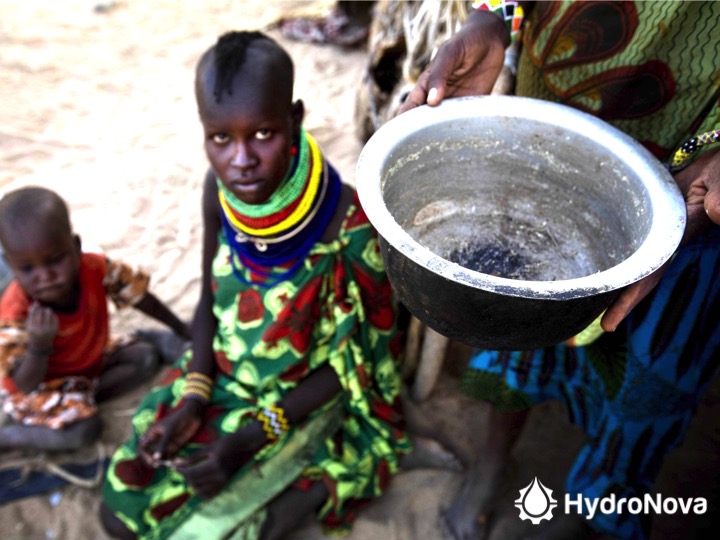
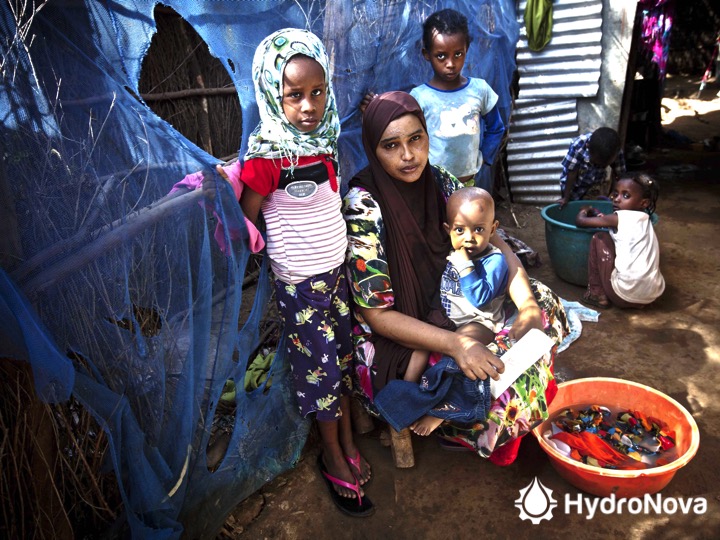
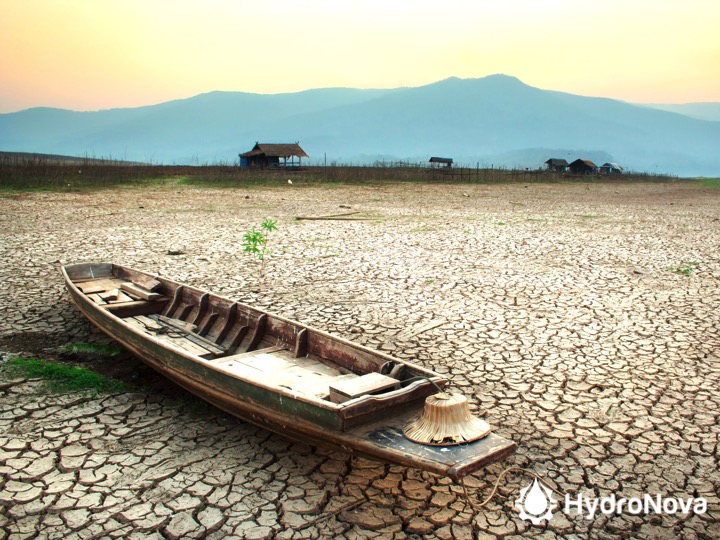
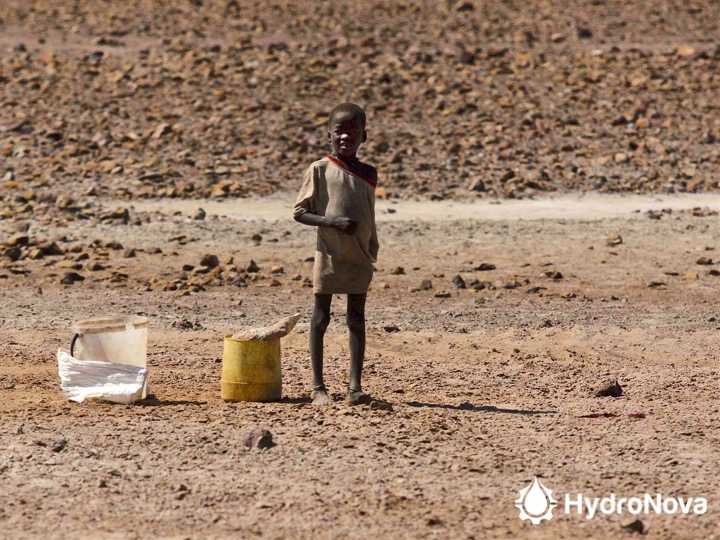
By July of 2013, the situation at the refugee camp in Kakuma in northwestern Kenya was dire. The thousands of refugees living at the camp had endured months of severe drought and their main water supply—a handful of boreholes—was drying up. Some refugees went for days without meals and had to wait longer to get water. To make matters worse, violence broke out in neighboring South Sudan in December of that year, causing tens of thousands to flee to Kakuma. The camp’s population nearly doubled to 200,000 in a span of a few months, placing a strain on the camp’s already overstretched resources. Desperate to find more water, relief agencies tried to drill new boreholes, but all turned up dry due to a lack of good information on local groundwater. The camp’s daily water ration fell to a mere 18 liters (5.3 ga), though most areas of the camp were not serviceable, forcing many refugees to wait up to four days to get water.
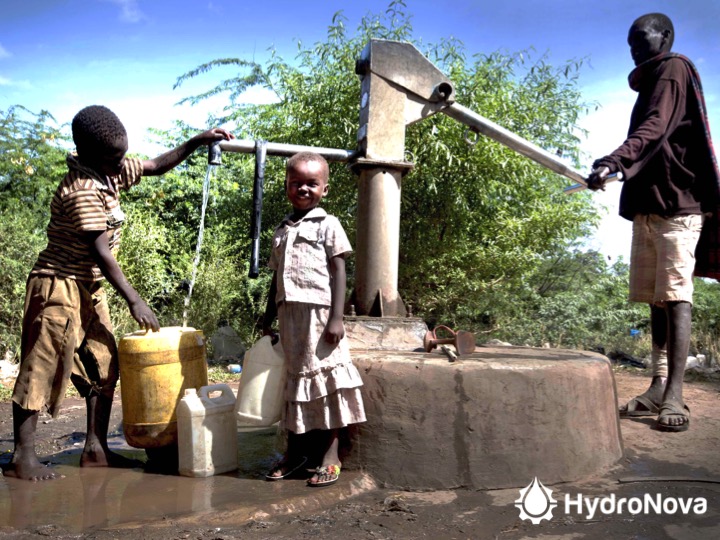
Seeking to stave off further crisis, Hydro Nova was called in to provide emergency groundwater intelligence and develop local capabilities in siting productive boreholes. Equipped with our high-resolution maps and customized water exploration devices, the local water team at Kakuma was able to drill over ten high-yielding boreholes (100 m3/hr or more), a water supply never before achieved in the arid area. Within just a few months, the water supply situation in Kakuma improved dramatically. By September of 2014, all areas of the camp were receiving enough water – a reliable 22 liters per capita a day – and the wait for water was virtually eliminated. With a more secure water supply, relief agencies have been able to deliver other needs of the refugees such as healthcare, food, shelter and education, and ultimately averting a massive humanitarian crisis.