
Dam Engineering for Emergency Flood Protection and Hydropower: Badush Dam (Iraq)
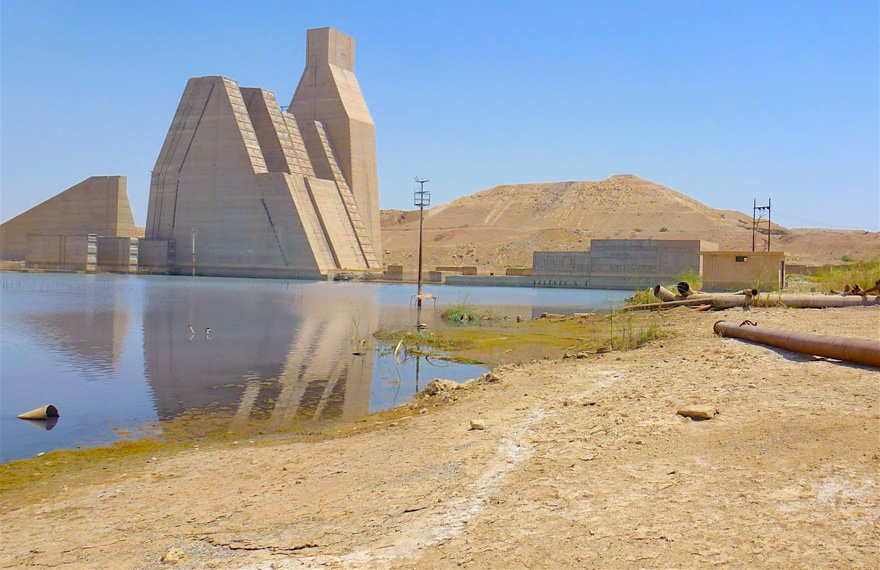
Client: Ministry of Water Resources
Opportunity
With the large Mosul Dam in northern Iraq at risk of structural failure, the government has planned the construction of the Badush Dam to obstruct the large wave that would result if the Mosul Dam collapsed. The Badush Dam is also intended to generate an additional 170 MW of power and help regulate the flow of the Tigris River. Construction of the dam began in 1988, but works were interrupted in 1991 due to lethal gas exhalation issues and international sanctions on Iraq. In 2008, the government re-launched efforts finish the dam.
Solution
In 2010, Hydro Nova completed the preparation of plans and specifications for the reconstruction of the dam and hydropower plant. The scope of work included dam safety assessments, geotechnical and geostructural analyses, risk-informed decision-making, spillway expansion design, and emergency remediation. The existing site, hydrology and stability were analyzed, along with the gas exhalation problem. We designed the new Badush Dam to function in tandem with the Mosul Dam in order to achieve an optimal use of water resources of the Tigris River and maximize power production. The engineered solution comprises a main earth-fill dam with an inclined clay core, two saddle dams at the left bank and a 240 m (790 ft) hollow buttress type concrete dam at the right bank, and a powerhouse with 4 Kaplan turbines. The concrete dam will include eight bottom outlets, a spillway and four power intakes and conduits, a stilling basin, headrace and tailrace channels.
Outcome
Once completed, the Badush reservoir will be able to store 10 billion cubic meters (8.1 million acre-ft), enough to protect populations from a failure at Mosul Dam and provide power to tens of thousands of people.